
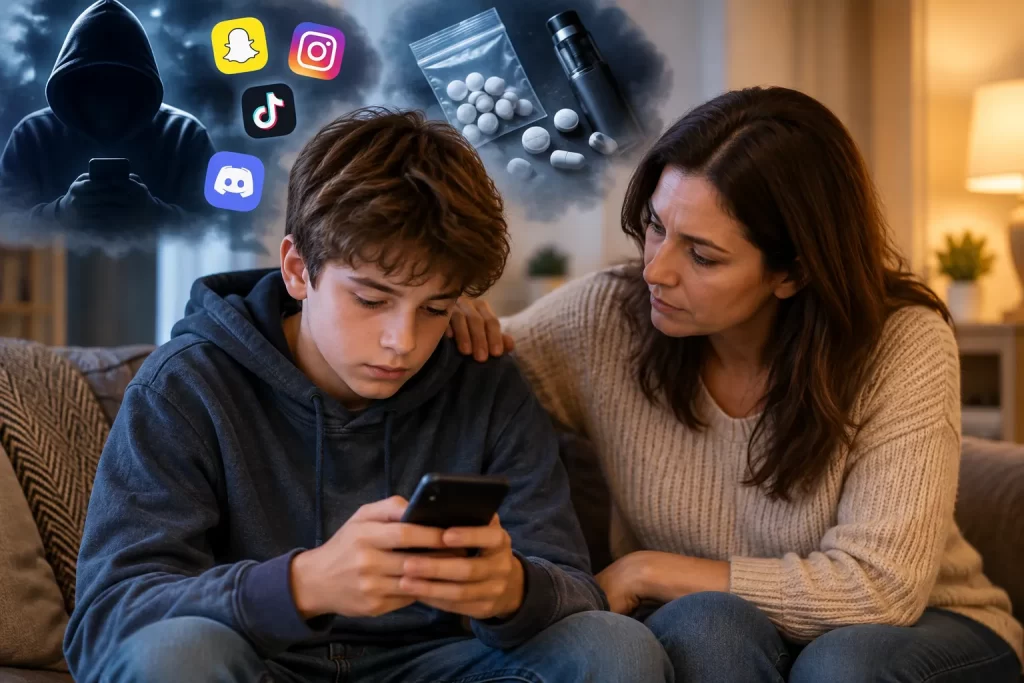
Middle school can feel like a blur for many parents. New schedules, new friend groups, and suddenly your once-chatty kid answers in one-word texts. It is also, according to prevention experts, one of the most important windows for talking about substance use seriously. What are those? How to prevent them and deal with your children? We will answer you in the following section of this blog.
Middle School is the Prevention Sweet Spot
Ages 10-14 are when most kids form their first real opinions about drugs and alcohol. It is long before parents think it’s “time” to have that conversation. Waiting until high school often means waiting too long. Attitudes, peer pressure, and curiosity all start taking shape in middle school. Therefore, this is the ideal window to plant the right information in teenagers’ minds before misinformation (or a friend, or the internet) gets there first.
Takeaway: don’t wait for a “reason” to talk about drugs. Middle school is the reason.
Kids Don’t Need a “Drug Dealer” Anymore
If your mental image of drug access is a shady deal in a parking lot, it’s time to move out of it. Today’s teens can access counterfeit pills, vapes, and other substances through social media DMs, group chats, and online marketplaces. Teens don’t even need to meet the seller in person. Fentanyl-laced pills disguised as common prescription drugs have made this shift especially dangerous. How? A single pill purchased through a screen can look completely legitimate.
Takeaway: The older warning signs like hanging out with the “wrong crowd” and sneaking off to meet someone don’t apply the way they used to. Access now often starts with a phone, not a person.
It’s Happening in American Communities Right Now
These aren’t rare and isolated stories. They are becoming disturbingly common across the country:
-
St. Louis, MO (2026)
Three young adults pleaded guilty to running a fentanyl operation out of a rented house, sold through social media. Court documents confirmed a teenager died in 2022 after purchasing what he believed were Xanax and Percocet pills from the group. A minor overdosed after buying what she thought was Percocet, and she survived only after receiving multiple doses of Narcan.
-
Evansville, IN
A dealer who advertised fentanyl-laced counterfeit pills over Snapchat was sentenced to 20 years in federal prison after being tied to at least three overdoses and a teenager’s death.
-
Olympia, WA
A local teen died after taking what he believed was MDMA, purchased through a dealer this family says was operating on Snapchat and selling to multiple students at the same high school.
-
Nationwide Data
The National Crime Prevention Council estimates that roughly 80% of teen and young adult fentanyl poisoning deaths can be traced back to social media. In fact, DEA testing has found that a large share of fake prescription pills seized in recent years contain a potentially lethal dose of fentanyl.
Takeaway: These cases share the same pattern: a phone, an app, and a pill that wasn’t what it claimed to be. It could happen in any town, including yours.
Your Kid’s Smartphone Deserves Its Own Conversation
Phones are not limited to texting and TikTok anymore. They are often the front door to risky content, whether that’s drug-related slang, pro-drug influencers, or direct offers to buy. As a parent, you don’t need to be a tech expert. You need to be more aware and ensure your children’s safety. You may start with:
- Ask what apps they use most, and ask them to show you (not tell you)
- Talk openly about how easy it is for anyone, including strangers, to message a minor
- Explain that emojis are sometimes used as code for drugs and that “harmless-looking” posts can hide real risk.
- Set the expectation that you’ll check in on their phone use periodically, not as a punishment but as a normal part of staying safe.
Takeaway: Treat the smartphone conversation like you would the “stranger danger” talk. In many ways, that’s exactly what it is now.
Give Them a Secret Word
You can use a very simple yet powerful tool: agree on a code word or phrase your child can text you if they’re ever in an uncomfortable or unsafe situation. It doesn’t matter where they are—at a party, in a car, anywhere—without having to explain themselves in the moment. One text like “Can you grab my sweater?” and you know to call, show up, or create an excuse for them to leave, without any questions asked.
Takeaway: A secret word removes the fear of “getting in trouble” and replaces it with an easy escape hatch. It tells your kids, “I’ve got your back, no matter what.”
Let the News Do the Talking
Bringing up drugs out of nowhere can feel forced, and teens are quick to shut down a conversation that feels like a lecture. Instead, you may use real-world moments as natural openers:
- A news story about counterfeit pills or vaping
- A show or movie storyline that touches on substance use
- Something a friend-of-a-friend mentioned
These “in the moment” conversations feel less like an interrogation and more like a normal part of talking about the world together.
Takeaway: You don’t need a perfect script. You just need an opening, as current affairs gives you one almost every week.
Parents Still Matter—A Lot
It’s easy to assume that once kids hit middle school, friends and social media take over as the biggest influence. But research consistently shows parents remain one of the strongest protective factors against youth substance use. Kids who feel connected to a parent and who know where that parent stands are significantly less likely to experiment.
Takeaway: You don’t have to be perfect or have all the answers. You just have to stay present, stay curious, and keep the conversation going.
Conclusion
Reading about prevention is a great start. However, experiencing it firsthand becomes even more powerful. Reality Tour brings parents and kids together for an eye-opening, evidence-based prevention experience that’s helped over 55,000 families start these exact conversations. It puts parents and children on the same page and directly addresses what parents said they wanted: honest information about the real and possible consequences of experimentation without relying on scare tactics.
The experience unfolds in three parts:
- The Consequences: Narrated life scenes designed for emotional, lasting recall (for youth ages 10-17, attending with a parent)
- The Coping Skills: Kids learn to recognize early signs of use, build personal prevention goals, practice refusal skills, and take home materials to keep the conversation going.
- The Interviews: A local law officer shares real community drug trends, and a young person in recovery offers an honest, de-glamorized look at use.
Are you ready to take the next step? Find a Reality Tour near you or learn how to bring Reality Tour to your community or school now.